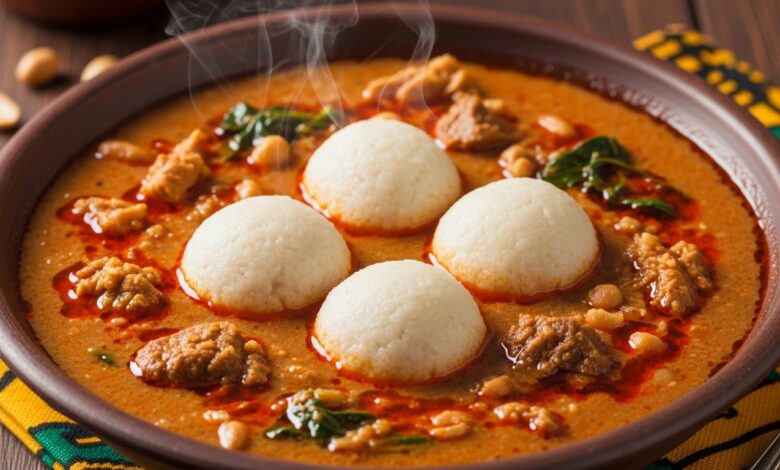
Few dishes embody the spirit of Ghanaian cuisine quite like Groundnut Soup (Nkate Nkwan) served with Rice Balls (Omo Tuo or Emotuo). This meal is a culinary triumph—a deeply comforting, rich, and savory soup that balances the creamy, nutty flavour of peanuts with the bright acidity of tomatoes and a subtle but powerful kick of spice. The velvety soup is traditionally eaten with soft, smooth rice balls, which serve as the perfect vehicle to scoop up every drop of the luxurious sauce.
This detailed recipe guides you through creating both the iconic soup and the sticky, smooth rice balls, bringing the warmth and flavor of a Ghanaian Sunday dinner right into your home. It’s an authentic taste that is surprisingly simple, yet profoundly satisfying.
Cooking Time & Prep Time
| Category | Time |
| Prep Time (Soup & Rice) | 30 minutes |
| Cook Time (Soup) | 1 hour 15 minutes – 1 hour 30 minutes |
| Total Time | Approximately 2 hours |
| Yield | 6–8 servings |
Ingredients
For the Groundnut Soup (Nkate Nkwan):
- 1.5 lbs (700g) Chicken (bone-in legs and thighs recommended for flavor) OR Beef/Goat meat
- 2 Tablespoons Olive Oil or Vegetable Oil
- 1 large Onion, chopped
- 4 cloves Garlic, peeled
- 2-inch piece Ginger, peeled and roughly chopped
- 1-2 Scotch Bonnet Peppers (or Habanero), whole (adjust to taste—use 1 whole pepper for flavor, add another for heat)
- 6 medium Tomatoes, chopped
- 3 Tablespoons Tomato Paste
- 1 ½ cups Natural, Smooth Peanut Butter (100% peanuts, no sugar/additives)
- 2 Bouillon Cubes (like Maggi or Knorr), crushed
- Salt and Black Pepper to taste
- 5–6 cups Water (plus more as needed)
For the Rice Balls (Omo Tuo):
- 2 cups Long-Grain White Rice (Jasmine or Basmati recommended)
- 6 cups Water
- 1 teaspoon Salt
Step-by-Step Instructions
Part 1: Preparing the Soup Base and Meat
- Prep Aromatics: Season your chicken generously with salt and pepper. In a large, heavy-bottomed pot, heat the oil over medium heat. Brown the chicken pieces on all sides (about 8–10 minutes) and remove from the pot, leaving the oil behind.
- Blend Aromatics: In a blender, combine the chopped onion, garlic, ginger, and a pinch of black pepper. Blend until you get a smooth paste.
- Steam Meat: Pour the blended onion mixture and about 1 cup of water into the pot. Add the chicken back in, along with the crushed bouillon cubes. Bring to a boil, then reduce heat, cover, and let the chicken steam-simmer for 15–20 minutes.
- Blend Tomato: Blend the chopped tomatoes until smooth. Pour the tomato puree through a sieve into the pot (to remove seeds and tough skins). Stir in the tomato paste. Cook for another 10 minutes.
Part 2: Adding the Groundnut
- Prepare Peanut Butter: In a separate bowl, whisk the peanut butter with 2 cups of warm water until completely smooth. You can also briefly blend this mixture to ensure there are absolutely no lumps.
- Add Groundnut: Pour the smooth peanut butter mixture into the main soup pot. Add the remaining 3–4 cups of water (or until you reach your desired soup consistency). Add the whole Scotch Bonnet pepper(s) now—do not cut them unless you want extreme spice!
- Simmer (The Crucial Stage): Bring the soup to a gentle boil, then reduce the heat to a very low simmer. Do not cover the pot completely, as the peanut butter mixture tends to foam up and boil over.
- Cook to Perfection: Let the soup simmer for 45 minutes to 1 hour. Stir occasionally to prevent the groundnut paste from sticking and burning at the bottom. The soup is ready when the color changes from a pale tan/cream to a deeper reddish-brown, and a layer of glistening, reddish oil (the fat from the peanuts) rises to the surface.
- Adjust Seasoning: Remove the whole pepper(s). Taste the soup and adjust the salt, pepper, or add a dash more tomato paste for color if desired.
Part 3: Making the Rice Balls (Omo Tuo)
- Cook the Rice: Rinse the rice once. In a pot, combine the rice, 6 cups of water, and salt. Bring to a boil, then cover and reduce the heat to low. Cook for 20–25 minutes until the rice is overcooked, very soft, and mushy.
- Mash: While the rice is still hot, use a sturdy wooden spoon or paddle to vigorously mash and knead the rice against the side of the pot until it forms a smooth, sticky, and uniform paste.
- Form Balls: Wet your hands with water. Scoop out about $\frac{3}{4}$ cup of the mashed rice and quickly roll it into a smooth, compact ball. You can also use a small, wet bowl, shaking it in a circular motion until the rice forms a ball shape.
Step 4: Serve
Ladle the hot groundnut soup into deep bowls. Place one or two warm rice balls on the side or directly into the soup. The rice balls are traditionally eaten by hand, breaking off small pieces to scoop up the soup.
Tips & Variations
- For a Smoother Soup: After blending the peanut butter with water, strain the liquid through a fine-mesh sieve before adding it to the pot. This catches any larger peanut pieces.
- Protein: Feel free to use beef, goat meat, smoked fish, or a combination. For a Vegetarian/Vegan version, use mushrooms, sweet potato chunks, or firm tofu, and vegetable stock instead of chicken/beef bouillon.
- Simple Syrup Tip: If you want to avoid the “float” of oil on top (though it’s traditional), use a brand of peanut butter that has the oil removed before grinding (like peanut butter powder mixed with water).
- Spice Level: Start with one whole Scotch Bonnet, and only break it open after cooking if you need more heat. If you like it mild, leave the pepper out entirely.
Nutritional Information (Approximate)
Based on 1 serving (about 1.5 cups of soup and one rice ball), using chicken and natural peanut butter.
| Component | Amount Per Serving |
| Calories | $550-650$ kcal |
| Protein | $35-40$ grams |
| Carbohydrates | $40-50$ grams |
| Total Fat | $30-35$ grams |
| Dietary Fiber | $6-8$ grams |
Note: This is a high-protein, calorie-dense, and highly satisfying meal. Fat content comes largely from the healthy monounsaturated and polyunsaturated fats in the peanuts.
Health Benefits
Groundnut soup is a powerhouse of nutrients:
- Complete Protein: When paired with meat and rice, this dish provides a complete profile of essential amino acids, supporting muscle growth and repair.
- Heart-Healthy Fats: Peanuts are rich in monounsaturated fats (like those found in olive oil), which are excellent for cardiovascular health.
- Fiber and Satiety: The groundnuts and tomatoes provide dietary fiber, and the combination of protein and fat makes this meal incredibly filling, aiding in appetite control.
- Micronutrients: Peanuts are a good source of B vitamins, Vitamin E, Magnesium, and Potassium, which are vital for energy metabolism and overall well-being.
Serving Suggestions
- Traditional: The rice balls (Omo Tuo) are the classic pairing. They are meant to be dense and sticky for easy handling.
- Alternatives: Serve the soup with Fufu (pounded yam or cassava), Banku (fermented corn/cassava dough), or simply plain boiled rice or yam.
- Vegetable Additions: For extra nutrition, add sliced mushrooms, spinach, or okra to the soup about 15 minutes before serving.
- Storage: The soup keeps exceptionally well! Store leftover soup in an airtight container in the refrigerator for up to 4 days or freeze for up to 3 months. Rice balls should be stored separately, wrapped in plastic wrap or placed in an airtight container, and can be reheated in the microwave or briefly steamed.
Conclusion
Ghanaian Groundnut Soup with Rice Balls is more than a recipe; it’s an experience in West African culinary tradition. The rich, aromatic broth and the smooth, comforting rice balls create a harmony of texture and flavor that is unmatched.
Don’t let the longer cooking time deter you—most of it is hands-off simmering, allowing the deep, savory flavors to fully develop. Make this beautiful dish and share a taste of Ghana with your family and friends. Enjoy your Nkate Nkwan!