Introduction
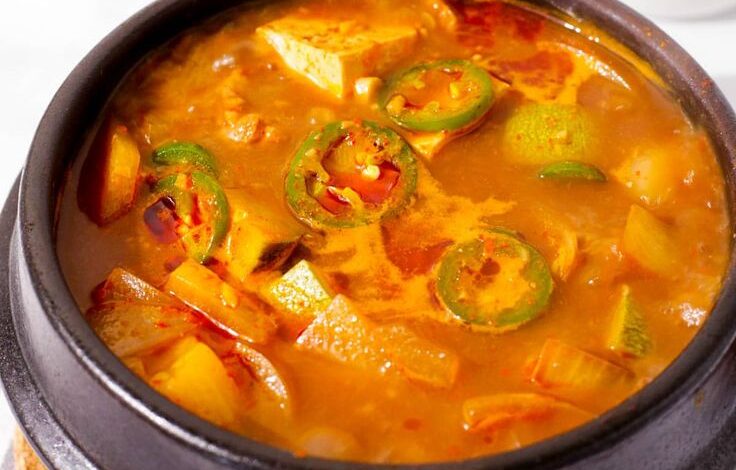
Get ready to discover your new favorite comforting bowl of warmth! Doenjang Guk, often called Korean Soybean Paste Stew, is a staple in Korean homes for a reason. It’s a deeply savory, incredibly flavorful soup packed with umami goodness from fermented soybean paste. Imagine a rich, earthy broth brimming with tender vegetables and silky tofu – it’s pure comfort in a bowl, perfect for any time of year.
What makes Doenjang Guk truly special is its heartwarming simplicity. Despite its complex flavor profile, it’s surprisingly easy and quick to whip up, even on a busy weeknight. Most of the magic happens in one pot, using readily available ingredients. You don’t need fancy techniques or hours in the kitchen to achieve a dish that tastes like it came straight from a Korean grandmother’s kitchen.
So, whether you’re new to Korean cuisine or a seasoned fan, this recipe is for you. It’s a nourishing, delicious, and deeply satisfying meal that will quickly become a regular in your cooking rotation. Let’s dive in and create some deliciousness together!
Cooking Time & Prep Time
- Prep Time: 20 minutes
- Cooking Time: 25 minutes
- Total Time: 45 minutes
Small tip: Prepping all your ingredients before you start cooking, known as “mise en place,” will make the entire process smoother and more enjoyable.
Ingredients
This recipe makes approximately 4 generous servings.
For the Broth
- 6 cups (1.4 liters) water
- 5-6 large dried anchovies (for soup, heads and guts removed if desired)
- 1 (4×5-inch) piece dried kelp (dashima)
For the Stew
- 4 tablespoons doenjang (Korean soybean paste)
- 1 teaspoon gochujang (Korean chili paste, optional, for a hint of spice)
- 2 cloves garlic, minced
- 1 medium potato (about 6 oz / 170g), peeled and cut into 1/2-inch cubes
- 1/2 medium onion, cut into 1/2-inch cubes
- 1/2 medium zucchini (about 5 oz / 140g), cut into 1/2-inch half-moons
- 3 oz (85g) mushrooms (shiitake or oyster recommended), sliced
- 1/2 block (7 oz / 200g) firm or medium-firm tofu, cut into 1/2-inch cubes
- 1 green onion, chopped (for garnish and flavor)
- 1/2 small red or green chili pepper (optional, for garnish and extra kick), thinly sliced
- 1/2 teaspoon sugar (optional, to balance flavors)
- 1 teaspoon soy sauce (optional, to taste)
Step-by-Step Instructions
-
Step 1: Prepare the Broth
In a large pot or Dutch oven, combine the water, dried anchovies, and dried kelp. Bring the mixture to a boil over medium-high heat. Once boiling, reduce the heat to medium and simmer for 15 minutes. This gentle simmer allows the flavors to fully develop.
Small tip: Removing the heads and guts of the anchovies can help reduce any bitterness, though it’s optional and many skip this step.
-
Step 2: Remove Broth Ingredients and Prepare Paste
After 15 minutes, carefully remove and discard the dried anchovies and kelp from the pot. The broth should now be fragrant and ready. In a small bowl, combine the doenjang, gochujang (if using), and minced garlic. Stir well to form a thick paste. This helps the doenjang dissolve more easily into the broth.
-
Step 3: Add First Round of Vegetables and Paste
Add the cubed potato and onion to the simmering broth. Then, spoon the doenjang-gochujang mixture into a fine-mesh strainer or directly into the pot. If using a strainer, dip it into the broth and use a spoon to press the paste through, leaving behind any undissolved bits. Stir well until the paste is fully incorporated into the broth.
Small tip: Using a strainer ensures a smoother broth, but if you don’t mind a few small lumps, you can add the paste directly.
-
Step 4: Simmer and Add Remaining Vegetables
Bring the stew back to a gentle boil, then reduce the heat to medium-low and simmer for about 5-7 minutes, or until the potatoes are almost tender. Next, add the zucchini and sliced mushrooms to the pot. Continue to simmer for another 3-4 minutes, allowing the new vegetables to cook through.
-
Step 5: Add Tofu and Final Seasoning
Gently add the cubed tofu to the stew. Simmer for another 2-3 minutes, just long enough for the tofu to heat through and absorb some of the broth’s flavor. Taste the stew at this point. If desired, add the optional sugar to balance the flavors or a splash of soy sauce for extra saltiness and depth.
Small tip: Tofu is delicate, so add it towards the end and stir gently to prevent it from breaking apart.
-
Step 6: Garnish and Serve
Once the stew is perfectly seasoned and all ingredients are cooked, remove the pot from the heat. Ladle the hot Doenjang Guk into individual serving bowls. Garnish each bowl generously with the chopped green onion and sliced chili pepper (if using). Serve immediately and enjoy the comforting warmth!
Tips & Variations
- Gluten-Free Option: Most doenjang is naturally gluten-free, but always check the label to be sure. If using soy sauce, substitute with tamari to ensure it’s gluten-free.
- Vegan/Vegetarian Option: Easily make this stew vegan by omitting the dried anchovies from the broth. Simply use 6 cups of water or a high-quality vegetable broth instead. The doenjang provides plenty of umami!
- More Vegetables or Protein: Feel free to customize with your favorite additions! Try adding spinach, Napa cabbage, daikon radish, or even a handful of bean sprouts for extra crunch. For more protein, thinly sliced beef brisket, pork belly, or even shrimp can be added during Step 4.
- Spicy Version: For those who love a kick, increase the amount of gochujang to 2 teaspoons or more. You can also add a teaspoon of gochugaru (Korean chili flakes) with the doenjang paste, or garnish with extra fresh chilies.
- Richer Broth Tip: For an even deeper flavor, some Koreans use rice water (the water left over from rinsing rice) as the base for their broth. This adds a subtle starchiness and richness. You can also add a tiny drizzle of sesame oil just before serving for an extra layer of nutty aroma.
Nutritional Information
Approximate values per serving (based on 4 servings):
- Calories: 280 kcal
- Protein: 18g
- Carbohydrates: 27g
- Fat: 10g
Please note: These values are approximate and can vary significantly depending on the specific brands and quantities of ingredients used.
Health Benefits
Doenjang Guk isn’t just delicious; it’s also packed with wonderful health benefits, thanks to its wholesome ingredients.
The star ingredient, doenjang, is a fermented soybean paste, rich in probiotics. These beneficial bacteria are fantastic for gut health, aiding digestion and potentially boosting your immune system. Doenjang also provides a good source of plant-based protein, essential amino acids, and minerals like iron and calcium.
Tofu, another key component, is an excellent source of lean plant protein. It’s low in calories and fat, yet high in calcium, manganese, and iron, making it a great addition for bone health and energy. Its mild flavor also allows it to absorb all the delicious notes of the stew.
The array of fresh vegetables like zucchini, potatoes, onions, and mushrooms contribute a wealth of vitamins, minerals, and dietary fiber. Zucchini offers Vitamin C and antioxidants, while potatoes provide potassium and Vitamin B6. Mushrooms are known for their B vitamins and unique immune-boosting properties.
Overall, Doenjang Guk is a nutrient-dense, comforting meal that supports overall well-being. It’s relatively low in calories but high in essential nutrients, making it a truly nourishing choice.
Serving Suggestions
- Classic Pairing: Always serve Doenjang Guk hot with a bowl of freshly cooked white or multi-grain rice. The rice soaks up the flavorful broth beautifully.
- Korean Feast: This stew is a perfect centerpiece for a traditional Korean meal. Serve it alongside an assortment of banchan (small side dishes) like kimchi, pickled radishes, or seasoned spinach.
- Main or Side: Doenjang Guk is hearty enough to be a stand-alone main dish, especially with rice. It also works wonderfully as a warming, savory soup course in a larger meal.
- Meal Prep Idea: Prepare the broth in advance and chop all your vegetables. Store them separately in the fridge. When you’re ready to eat, simply combine and cook for a quick and easy weeknight dinner.
Storage Tips
Leftover Doenjang Guk can be stored in an airtight container in the refrigerator for 3-4 days. While it can be frozen, the texture of the potatoes and tofu might change slightly upon thawing. If freezing, consider freezing the broth base without these ingredients, then adding fresh ones when reheating. To reheat, simply warm gently on the stovetop over medium heat until simmering, or in the microwave. You might need to add a splash of water or broth if it has thickened too much.
Conclusion
There you have it – a complete guide to making your very own bowl of delicious and comforting Doenjang Guk! This Korean soybean paste stew is truly a marvel: deeply savory, packed with healthy ingredients, and surprisingly simple to prepare. It’s the kind of dish that warms you from the inside out, offering a taste of authentic Korean home cooking right in your own kitchen.
Don’t be intimidated by the unique ingredients; doenjang is readily available in most Asian grocery stores and online. Once you try this recipe, you’ll see just how easy it is to create such a flavorful and wholesome meal. Feel free to experiment with the vegetables and spice level to make it perfectly suited to your taste buds.
So go ahead, gather your ingredients, and give this wonderful Doenjang Guk a try. It’s a perfect dish to share with family and friends, bringing warmth and flavor to any table. Happy cooking, and enjoy every comforting spoonful!